
The honest version of the 22kW question is the one most buyers never get told upfront: a 22kW EV charger is three times faster than a 7kW unit, but it only delivers that speed in a minority of real-world UK installations. Understanding where it does pay off — and where it quietly does not — is the difference between a smart infrastructure investment and an expensive mismatch. This guide sets out the facts so workplaces, fleet operators, property developers and three-phase homeowners can specify with confidence.
Many buyers compare 22kW chargers before confirming whether their vehicle and property can actually use 22kW AC charging. This guide is designed to prevent that mistake before customers spend money on the wrong infrastructure.
What a 22kW three-phase charger actually is
A 22kW EV charger delivers high-speed Level 2 AC charging by drawing power across a three-phase electricity supply. Where a single-phase supply uses one live conductor at 230V to deliver up to roughly 7.4kW, a 22kW three-phase charger uses three live conductors at 400V, offset by 120 degrees, to deliver smooth, constant power up to 22kW. In range terms, that is broadly the difference between adding around 30 miles of range per hour and adding closer to 90.
That speed is genuinely useful — but only when two conditions are met: the site has (or can economically obtain) a three-phase supply, and the vehicles using it can accept 22kW AC. Both points matter more than the headline figure, and we will deal with each in turn.

The point most buyers miss: your car may cap the speed
A charger cannot push more power than a vehicle’s onboard charger (OBC) will accept. Most EVs cap AC charging at 7.4kW or 11kW, regardless of what the wallbox is rated for. Only a shortlist of 3-phase-compatible cars can use the full 22kW AC rate — historically the Renault Zoe, certain BMW models with the optional AC fast-charging package, the Porsche Taycan, some Audi e-tron derivatives and a handful of others. Many flagship EVs, including most current Teslas, top out at 11kW on AC.
Example AC charging limits (verify before publication)
| Vehicle / Type | Typical AC charging limit | What it means |
|---|---|---|
| Most Tesla Model 3 / Model Y variants | Usually up to 11kW AC | EV22 may not deliver full 22kW AC |
| Many Kia / Hyundai / VW / BMW EVs | Often 7.4kW or 11kW AC (model-dependent) | Check exact onboard charger rating |
| Renault Zoe, selected versions | One of the better-known 22kW AC-capable EVs | Can make stronger use of 22kW AC |
| Porsche Taycan, selected configs | Higher AC capability may be available | Verify optional onboard charger package |
| Mixed workplace fleet | Varies by vehicle | EV22 still useful where bay turnover & multiple users matter |
Important: do not publish exact vehicle claims until checked against current manufacturer data. Figures above are indicative and model/spec-dependent.
Should you choose a 22kW EV charger?
Use this simple decision route:
Question 1 — Does the property have a three-phase supply?
- No: choose the techtron® EV7 EVO, or investigate the supply-upgrade cost first.
- Yes: continue to Question 2.
Question 2 — Can the vehicle accept 22kW AC charging?
- No: choose the EV7 or EV11 EVO depending on supply and use case.
- Yes: continue to Question 3.
Question 3 — Will the charger serve multiple vehicles, fleet vehicles or a workplace?
- No: the EV7 or EV11 EVO may be more cost-effective.
- Yes: continue to Question 4.
Question 4 — Is charging speed commercially important?
- No: avoid overspending on unnecessary infrastructure.
- Yes: the techtron® EV22 EVO becomes more commercially relevant.
Three-phase supply: the real cost driver
Around 97% of UK homes are single-phase, which is why the three-phase EV charger home question usually comes down to one number: the supply upgrade. Industry installers in 2026 typically quote a three-phase supply upgrade cost of roughly £3,000–£8,000 for the incoming DNO service, plus £500–£1,500 for a three-phase consumer unit and £500–£2,000 to balance internal circuits — commonly £5,000–£12,000 all-in, and more where street-level network reinforcement is required.
There is also a process and a timeline. A 22kW installation needs an “Apply to Connect” application to your Distribution Network Operator (DNO), who assess whether the local network can carry the load. That assessment commonly takes several weeks. For a single-EV domestic driveway charging overnight, this rarely makes financial sense — a 7kW unit already fully charges any current EV by morning. For commercial EV charger 22kW deployments, the maths inverts: where vehicles return mid-day, share bays, or run high daily mileage, the faster throughput pays for the infrastructure.
What happens during a DNO assessment?
- The installer checks whether the site can support the proposed charger load.
- The DNO reviews local network capacity.
- The DNO confirms whether the connection is acceptable, requires upgrade work, or needs reinforcement.
- The customer receives a timescale and cost estimate where works are required.
- Installation should only proceed once supply, protection and compliance requirements are clear.
Where 22kW genuinely earns its place
- Workplaces and property developments — shared bays turning over multiple vehicles per day, where 22kW (or 11kW per compatible car) keeps spaces moving. Where multiple chargers must share a supply, load management is delivered by an external system rather than the charger itself.
- Fleet and commercial charging — operational vehicles that need to be back on the road quickly rather than parked overnight.
- Three-phase homes — properties that already have three-phase (often rural, new-build or larger homes), especially with two EVs, very high mileage, or 12kWp+ solar PV.
- Solar-rich sites — where surplus generation can be directed into faster charging windows.
Introducing the techtron® EV22 EVO
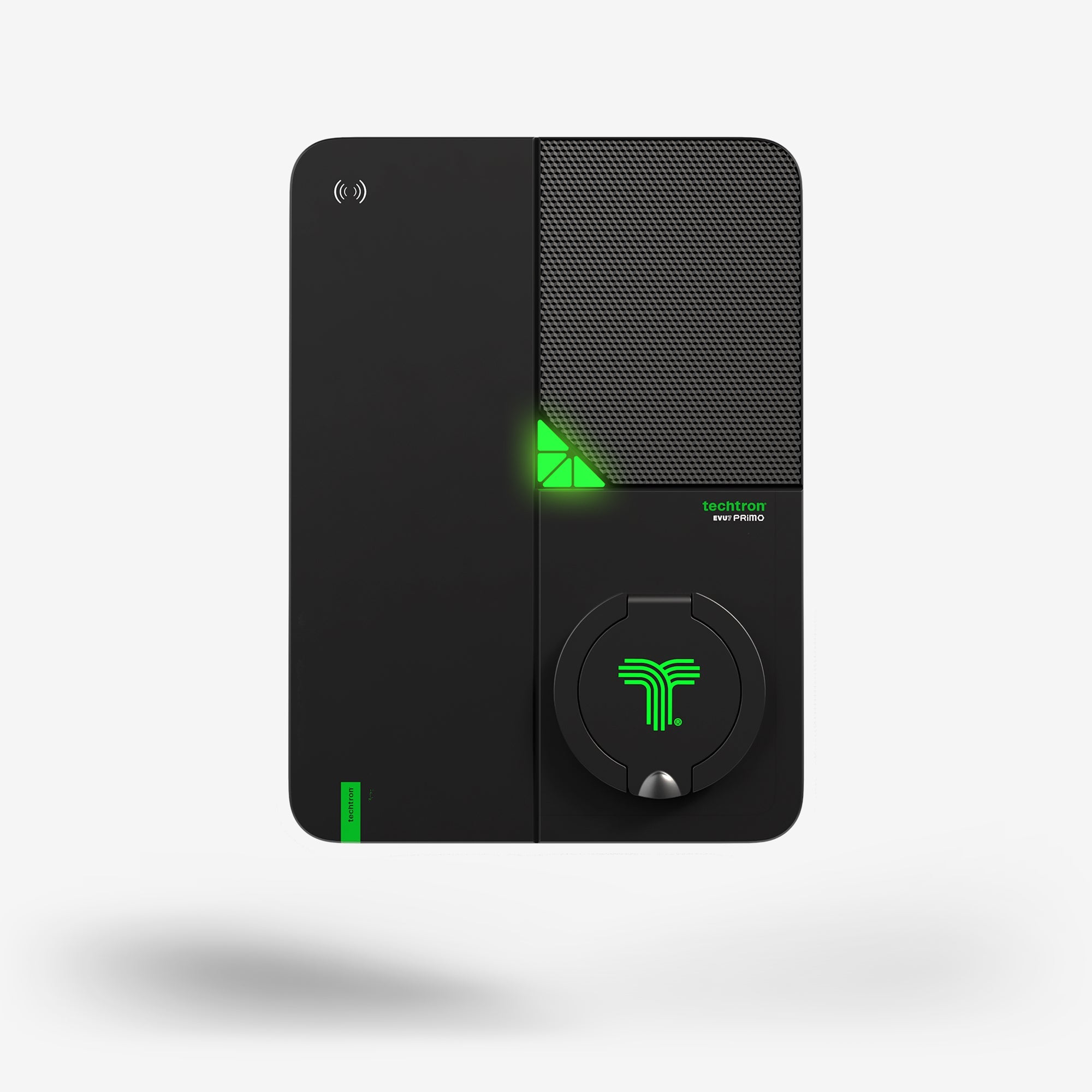
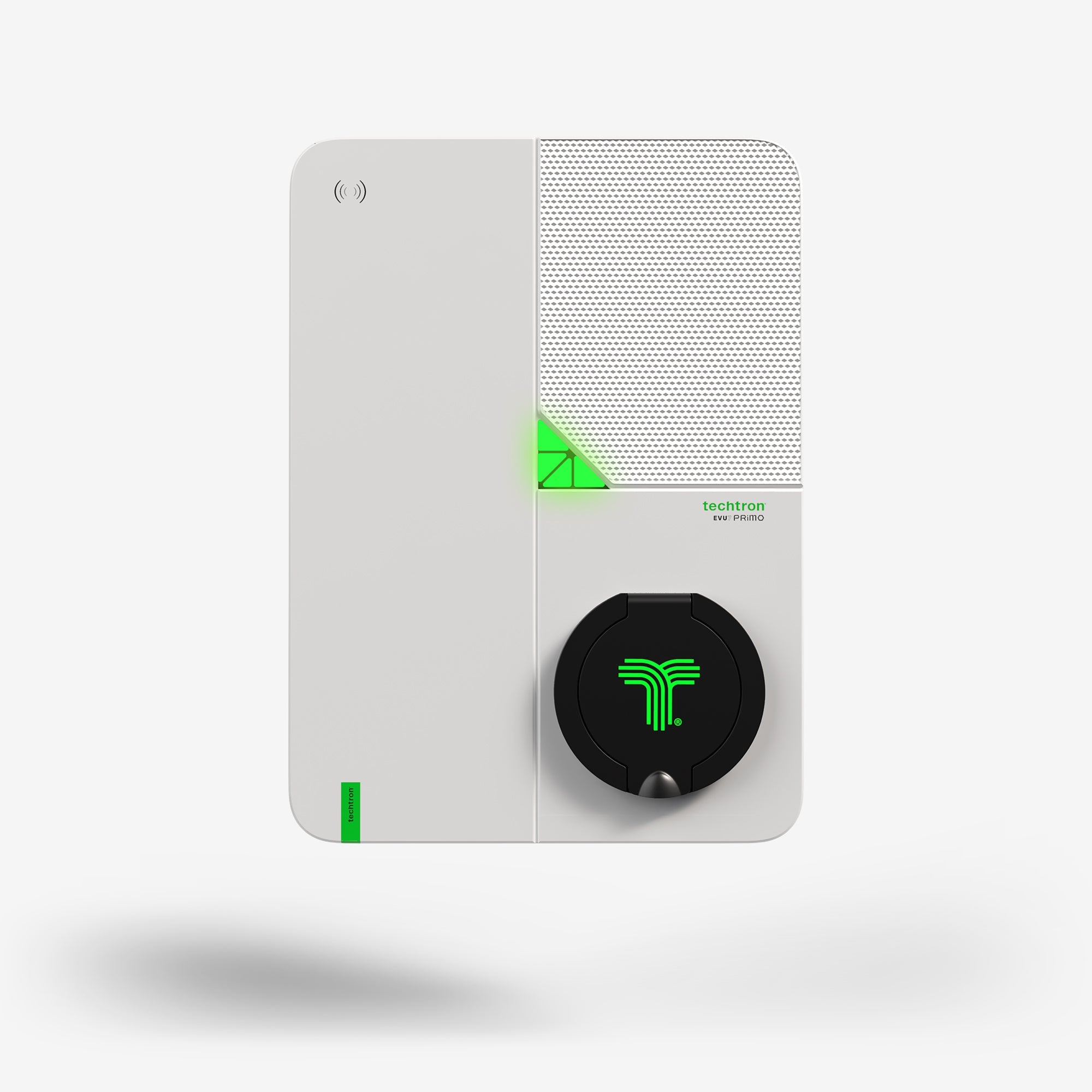
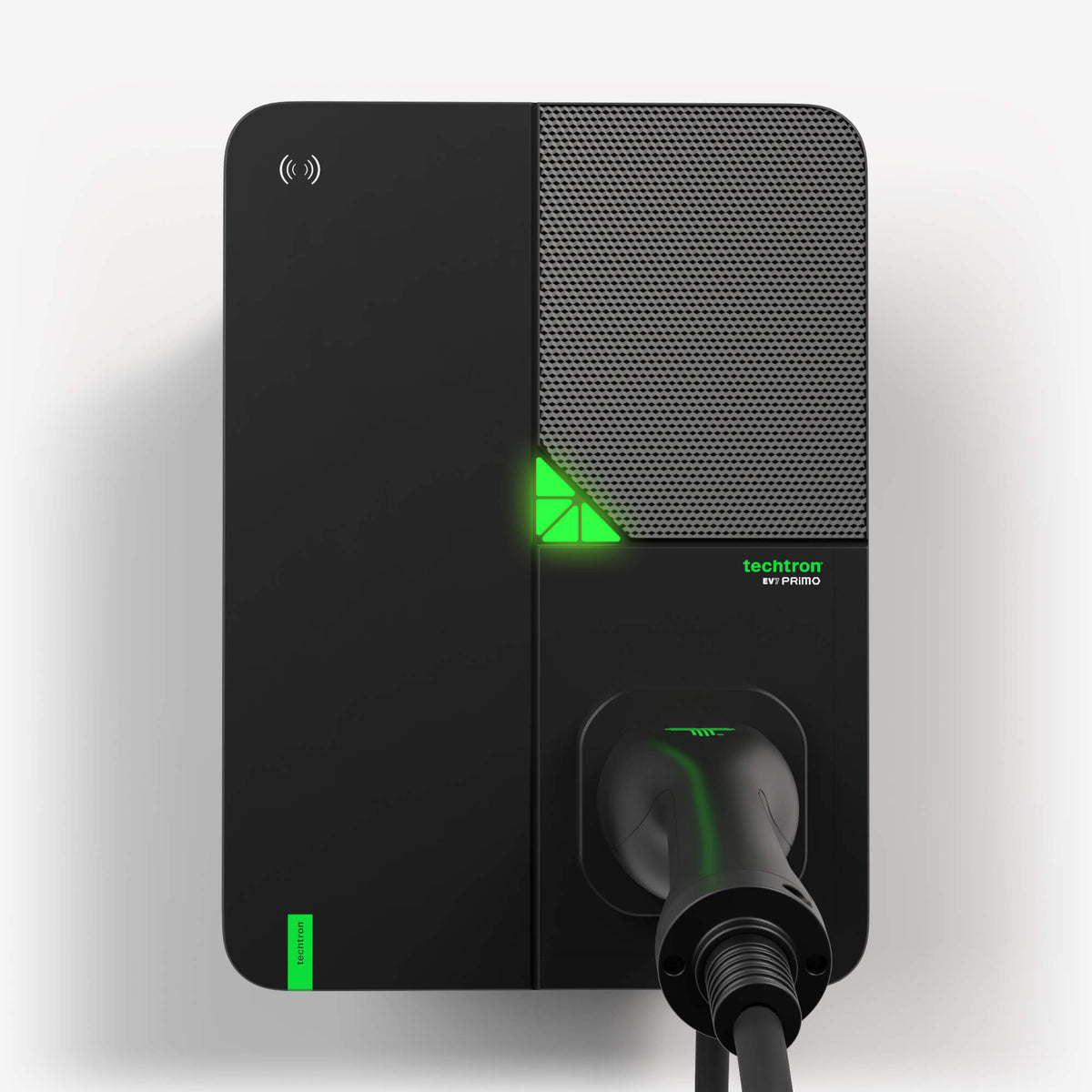
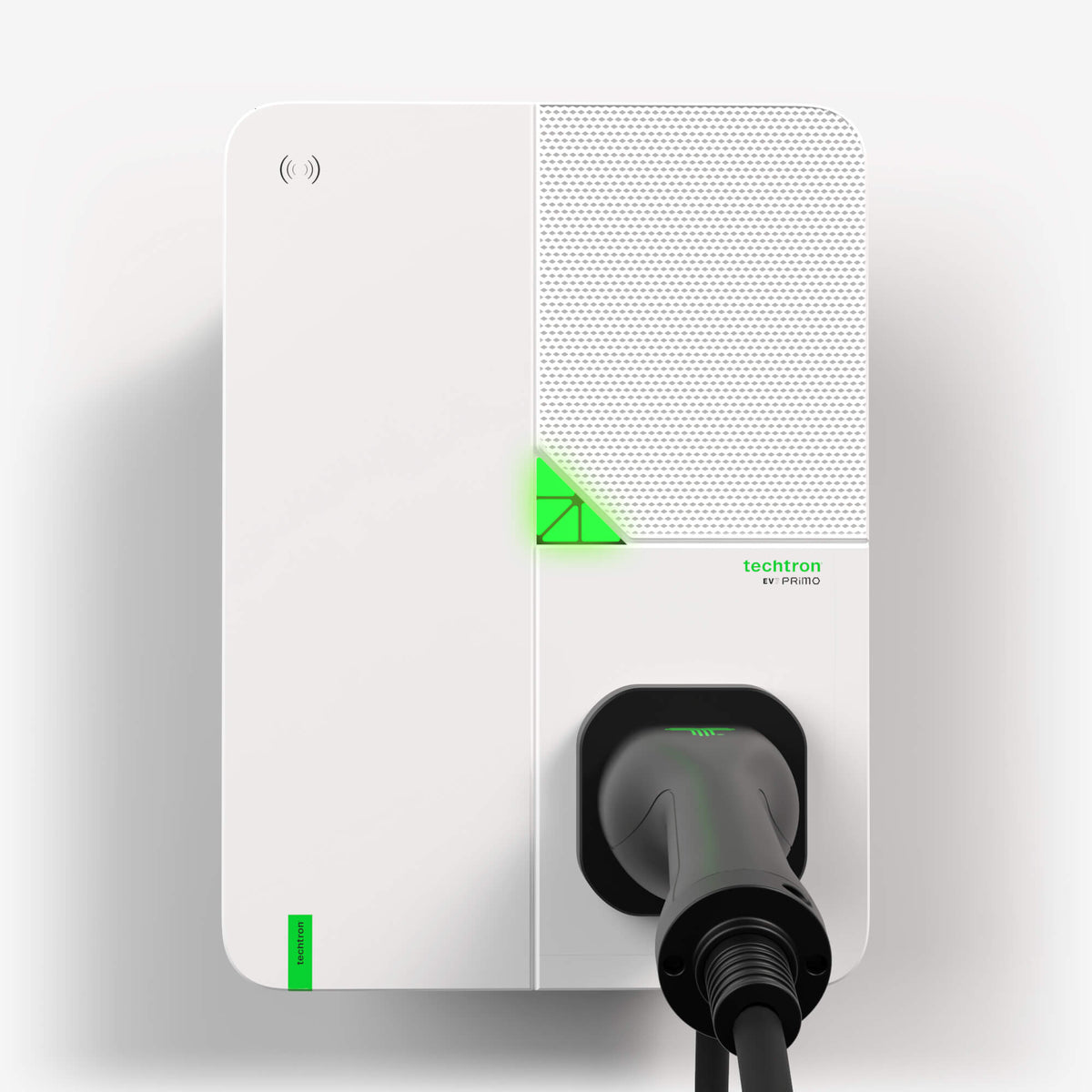
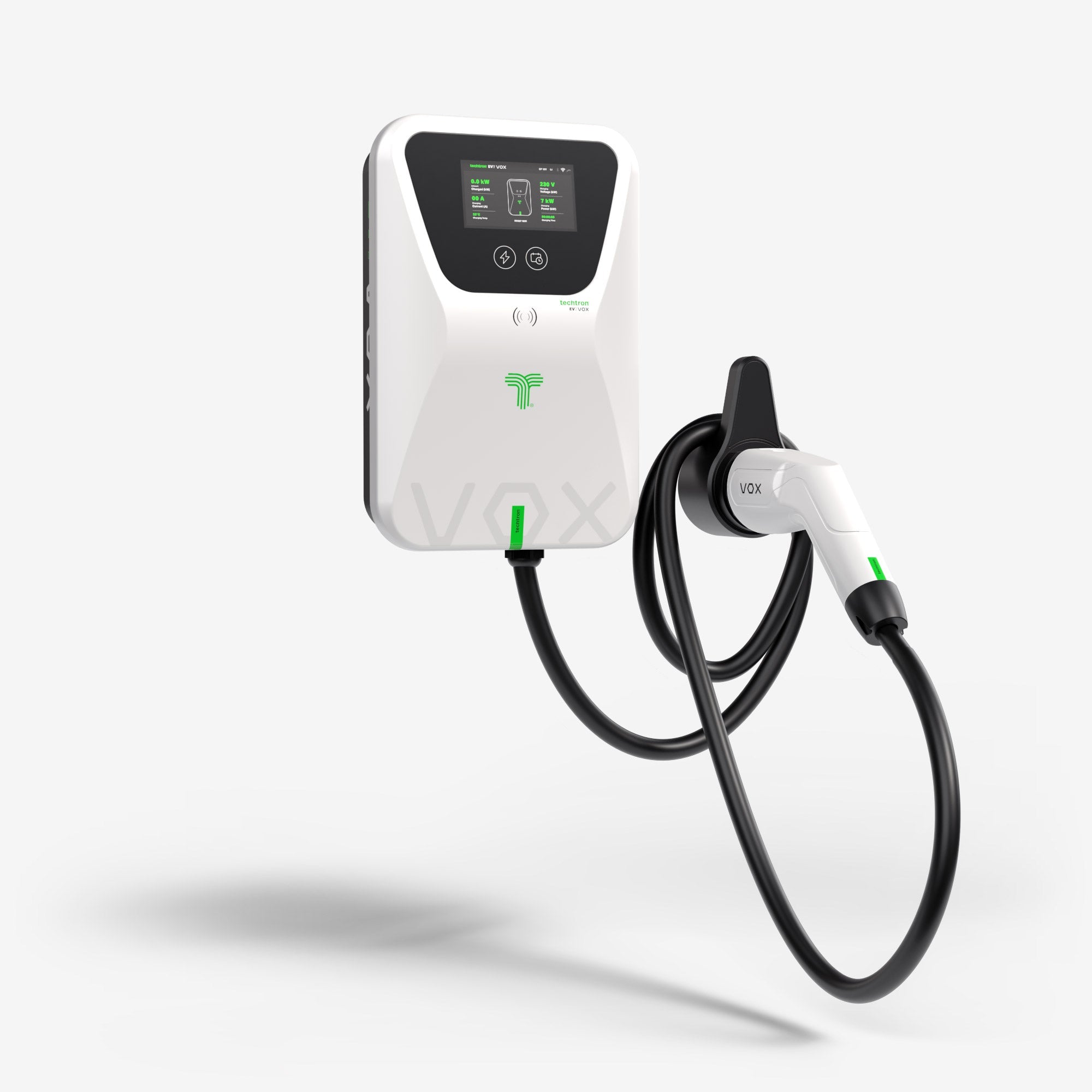
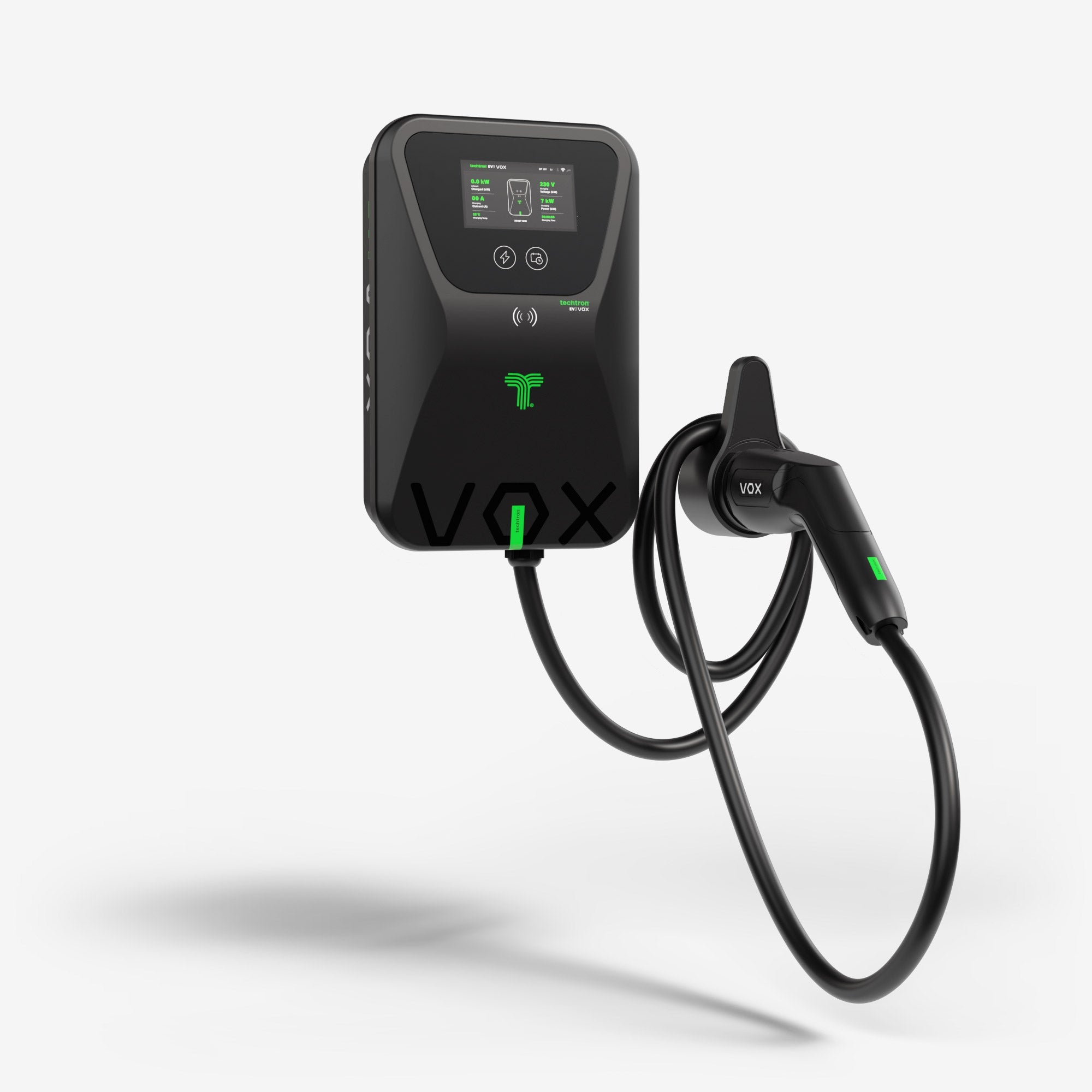
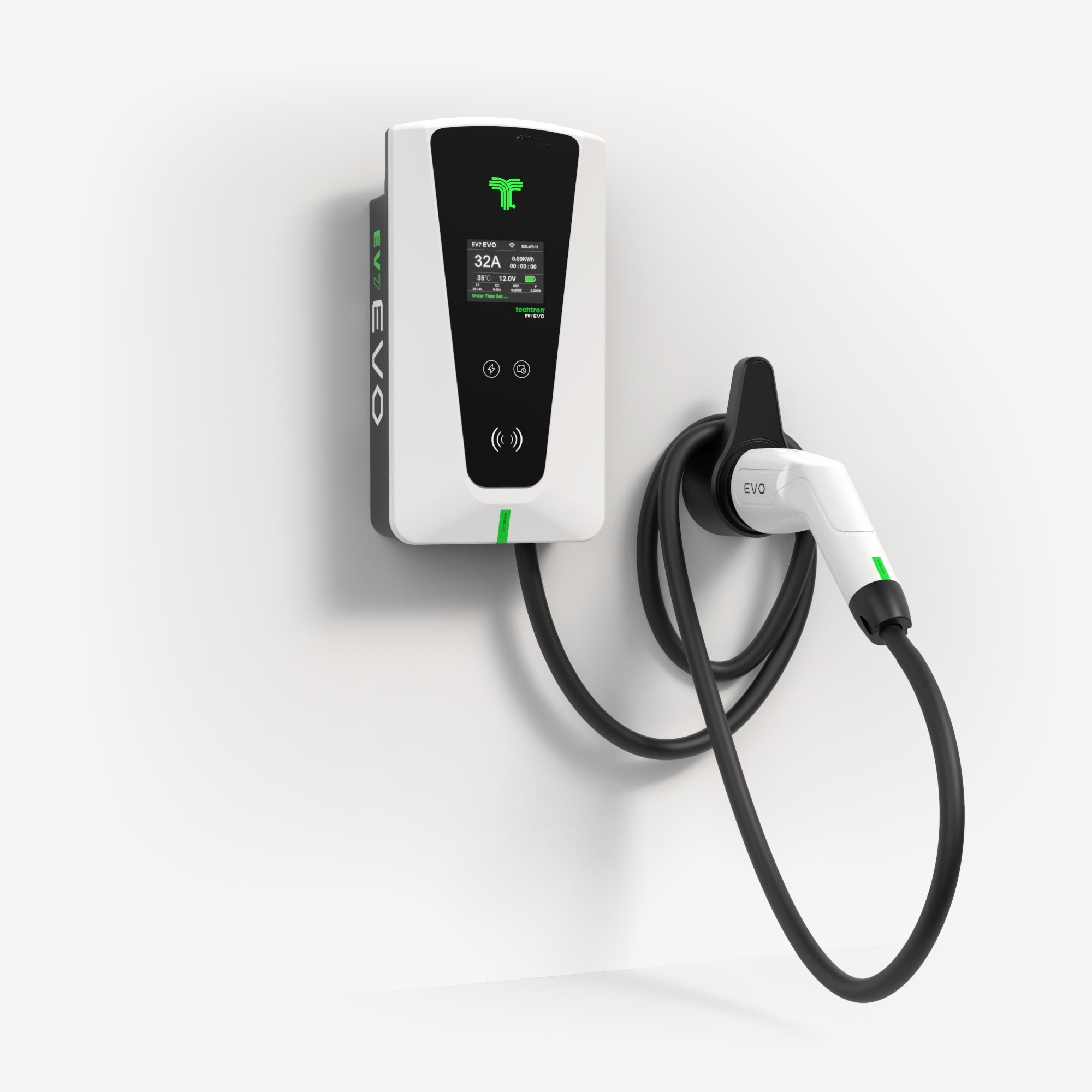
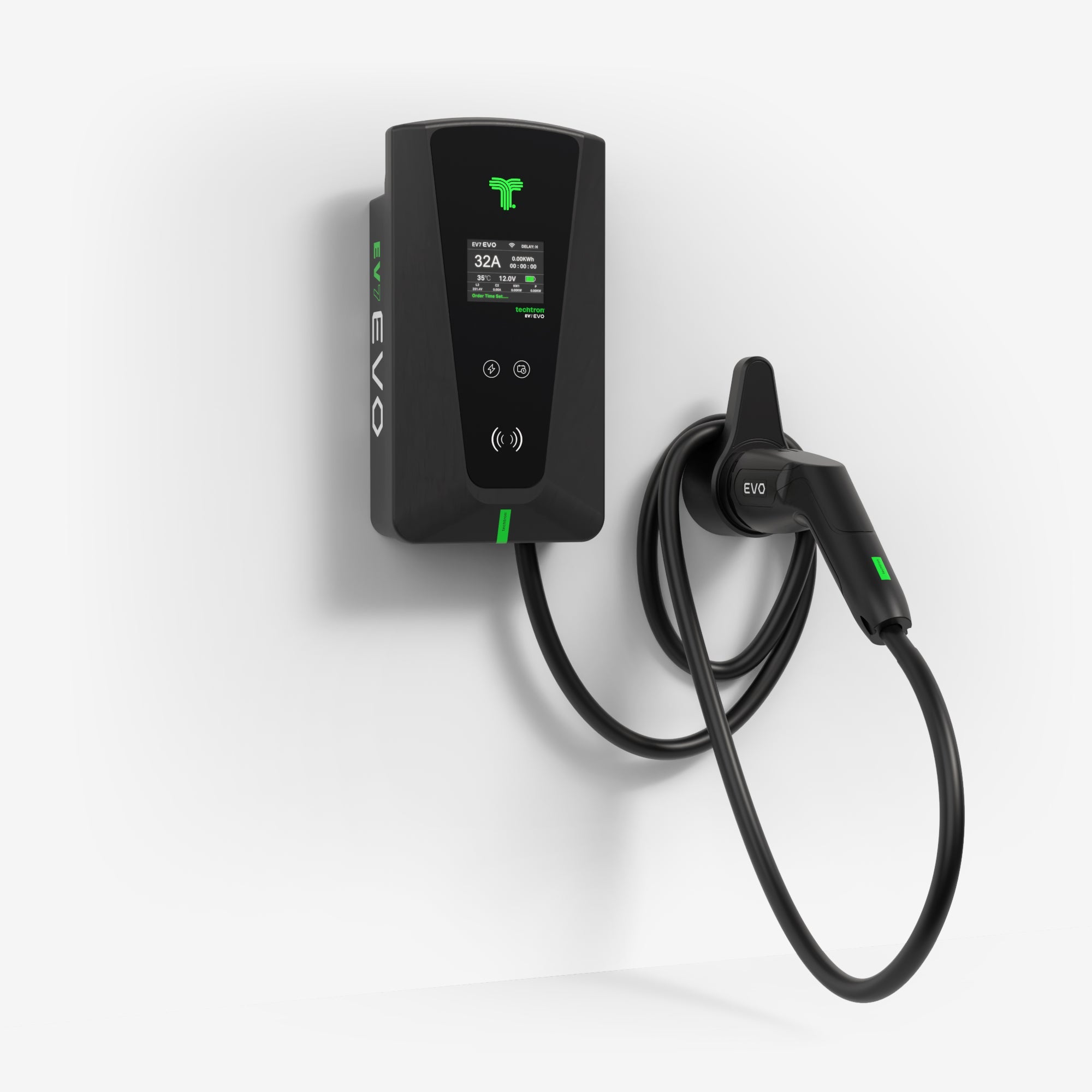
The techtron® EV22 EVO is the 22kW, three-phase, Type 2 model in the techtron® EVO Smart EV Charger Range, engineered specifically for the commercial and three-phase scenarios above. It is built and certified to UK smart-charging requirements (CE, UKCA, RoHS) for workplace and commercial deployment.
Specification highlights
EV22 EVO — verified against techtron® EV EVO Range Data Sheet V.009.
- 22kW three-phase charger — Type 2 connector, Mode 3, rated for AC400V (3P+N+PE) three-phase supply; 32A rated output.
- Estimated charge time of around 3–4 hours for a ~60kWh battery on a compatible vehicle (vehicle OBC dependent).
- 14-in-1 intelligent safety suite with integrated Type A RCD, 6mA DC leakage detection and PEN-fault protection (Double Secure™) — important for shared and outdoor sites.
- IP65-rated control box and gun head for dependable outdoor, all-weather operation; PC940 polymer / galvanised-steel construction.
- Smart control via the techtron® Smart App — remote start/stop, off-peak scheduling, live monitoring, current adjustment and OTA updates.
- Dual-band Wi-Fi (2.4/5GHz) and Bluetooth 5.3, a 2.8-inch LCD display, and RFID access control (2 cards and fobs included) for authorised charging; offline charging supported via RFID.
- 5m Type 2 cable; available in White or Black. Net weight 4.8kg (gross 7.6kg).
- Warranty: 1 year as standard, extendable to 3 years with registration.
EV7 vs EV11 vs EV22: choosing the right power
Matching the charger to the supply and the use case is where specification errors get expensive. This comparison tells you what must be true before each charger makes sense:
| Model | Power / Supply | Best for | Vehicle req. | Site req. | Typical charge* | Best CTA |
|---|---|---|---|---|---|---|
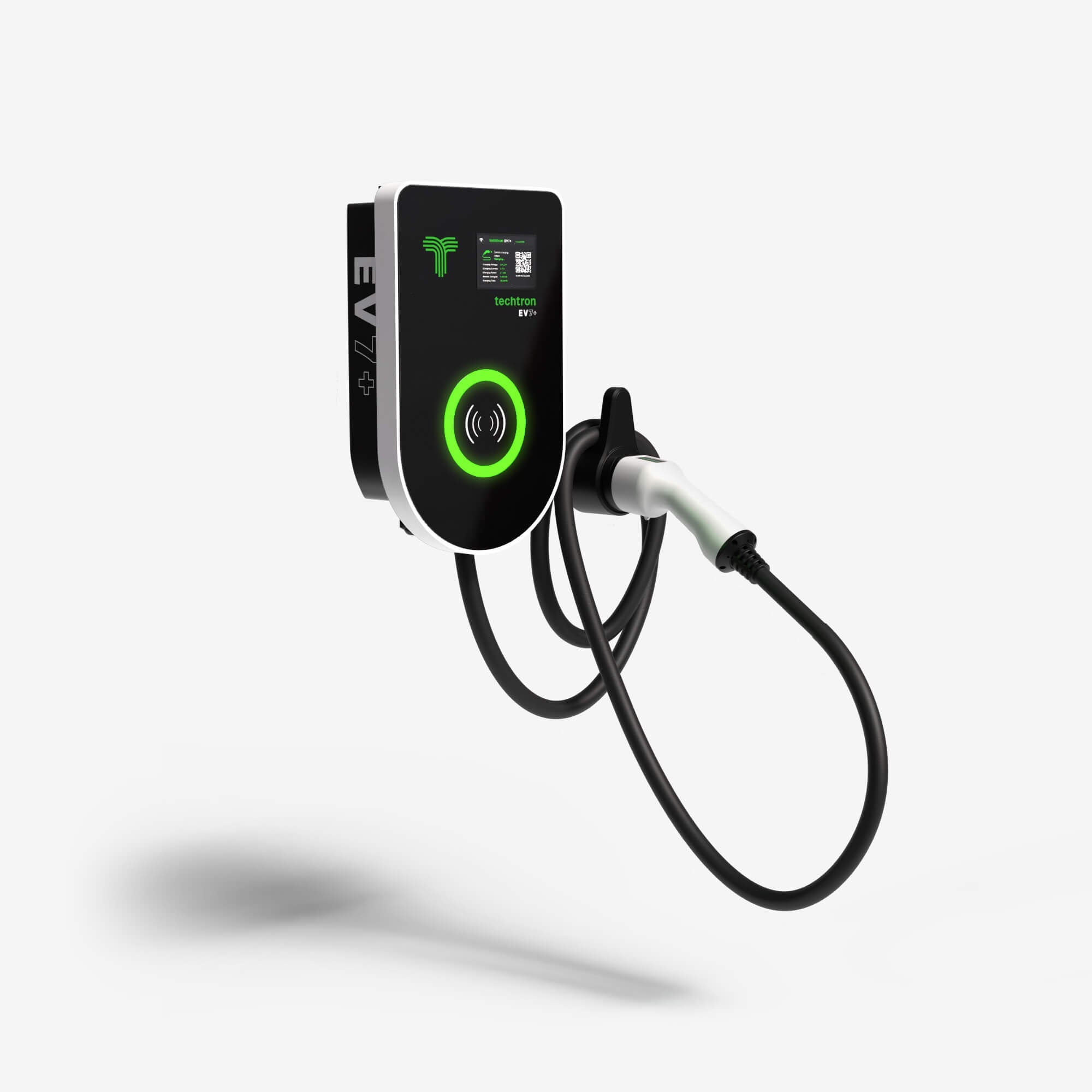
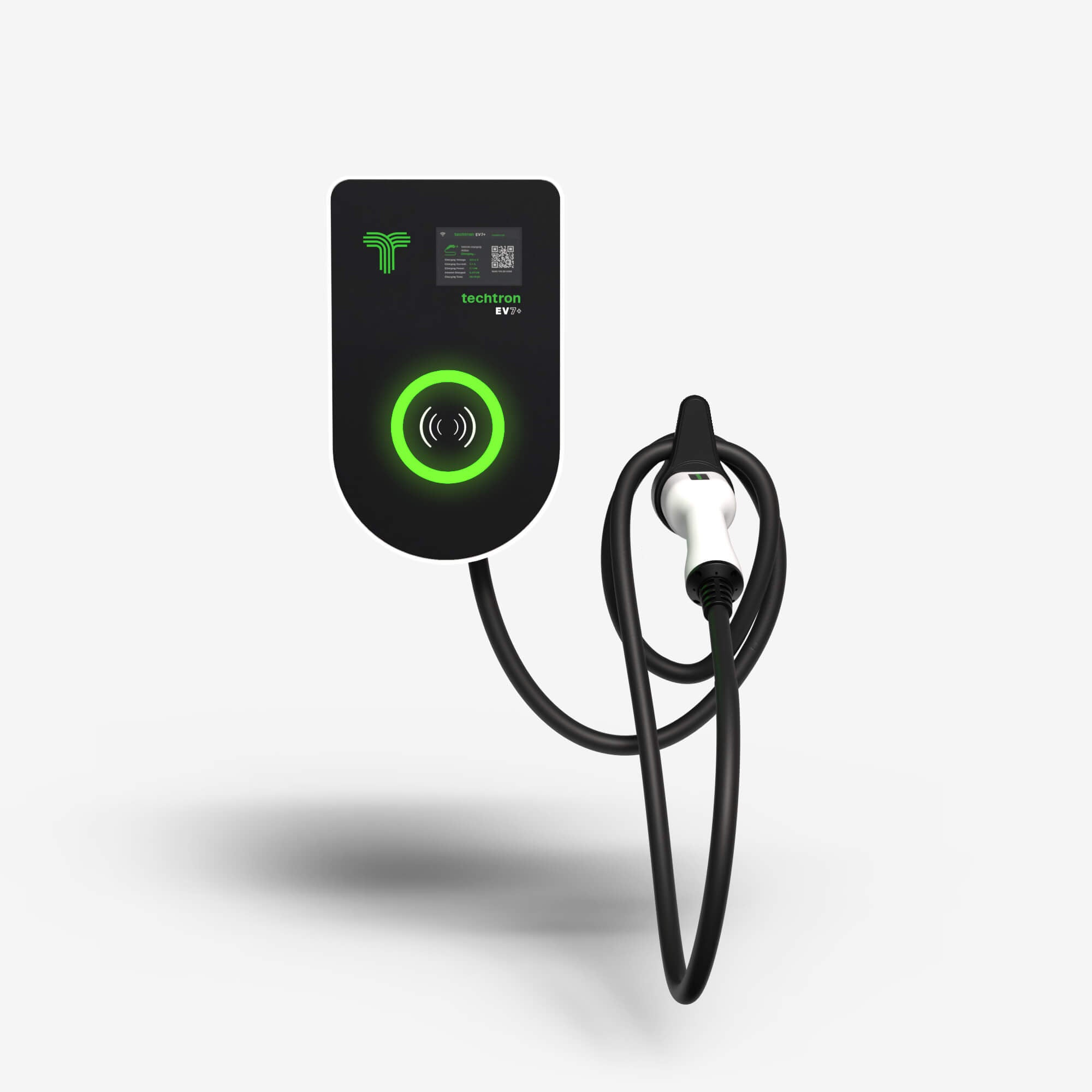
| EV7 EVO | 7kW class, single phase | Standard home & overnight charging | Most EVs can use this level | Standard domestic supply where suitable | ~8–9 hrs (60kWh) | View EV7 EVO |
| EV11 EVO | 11kW, three phase | Faster homes & light-commercial sites | Vehicle must support 11kW AC | Three-phase supply required | ~5–6 hrs where supported | Compare EV11 EVO |
| EV22 EVO | 22kW, three phase | Commercial, workplace, fleet & high-turnover bays | Vehicle must support higher AC for full benefit | Three-phase supply + site assessment | ~3–4 hrs where supported | Explore EV22 EVO |
*Typical time for a ~60kWh EV battery; actual time depends on battery size and the vehicle’s onboard charger limit.
Future-proofing: what to consider before choosing 22kW
A 22kW charger should not be chosen only for speed. For workplaces and fleets, the wider installation should also be assessed against future needs. Some of the following are delivered by the charger; others require an external energy-management system or backend — confirm which applies to your site before committing:
- On the EV22 EVO: smart-app scheduling, off-peak charging, current adjustment, RFID/app multi-user access control, and OTA updates.
- Via external systems: dynamic load balancing and multi-charger load sharing (not provided by the unit itself), surplus-solar charging via a hybrid inverter or EMS, OCPP/backend fleet management, battery-storage integration, demand response and future V2G / V2H readiness.
Not every customer needs all of these, but commercial buyers should confirm which capabilities sit in the charger versus the surrounding system before committing to a long-term charging-infrastructure decision.
The bottom line
A 22kW three-phase charger is a commercial-grade tool. For workplaces, fleets, developments and genuine three-phase homes with compatible vehicles, it is the right investment — and the EV22 EVO pairs that power with the safety, smart control and compliance those environments demand. For a typical single-car home on single-phase, a 7kW unit such as the techtron® EV7 EVO remains the sensible choice. Specify around the supply and the vehicle, not the headline number, and the decision becomes straightforward.
Next step: your 22kW pre-purchase checklist
Before choosing a 22kW charger, confirm:
- Your supply type (single- or three-phase)
- Your vehicle’s AC charging limit
- Whether a three-phase upgrade is needed
- DNO approval requirement
- Installation cost
- Whether the charger qualifies for OZEV support
- Whether multiple users or fleet vehicles will use the charger
- Whether load balancing or OCPP support is needed
Download the 22kW EV Charger Buyer Checklist or speak to a techtron® EV charging specialist. You can also explore the techtron® EVO Smart EV Charger Range or find a certified OZEV installer near you.
Related techtron® guides
- EV Charger Installation Guide
- OZEV Grant Guide
- Workplace Charging Scheme Guide
- Fleet EV Charging Guide
- Home EV Charging Guide
- EV Charging Cost Calculator
- EV7 vs EV11 vs EV22 Charger Guide
- Solar EV Charging Guide
How this guide was prepared
This guide was prepared using current UK EV charging installation considerations, three-phase supply requirements, vehicle onboard-charger limitations, product specification checks and OZEV grant-route considerations. Product-specific claims should be checked against the live techtron® product page and official grant guidance before publication.
FAQ
Concise, directly-answerable questions chosen for featured-snippet and AI-answer eligibility. Each answer leads with the direct response.
Do I need a three-phase supply for a 22kW EV charger?
Yes. A 22kW charger requires a three-phase electricity supply. On a single-phase supply it will either run at around 7.4kW or not operate at all. Around 97% of UK homes are single-phase, so most homes would need a supply upgrade first.
How much does it cost to upgrade to a three-phase supply in the UK?
In 2026, a single-phase to three-phase upgrade typically costs £5,000–£12,000 all-in, covering the DNO incoming service (£3,000–£8,000), a three-phase consumer unit (£500–£1,500) and internal circuit changes (£500–£2,000). Costs rise where street-level network reinforcement is needed, and vary by DNO area; confirm with a quotation.
Which cars can actually charge at 22kW AC?
Only a minority of EVs accept the full 22kW AC rate — historically the Renault Zoe, certain BMW models with the optional AC fast-charging package, the Porsche Taycan and some Audi derivatives. Most EVs, including most current Teslas, cap AC charging at 7.4kW or 11kW. Always check your vehicle’s onboard charger rating.
Is a 22kW charger worth it for home use?
For most single-car UK homes, no — a 7kW charger fully charges any current EV overnight without the cost of a three-phase upgrade. A 22kW charger is worth it for workplaces, fleets, property developments, and three-phase homes with multiple or high-mileage EVs.
Does every EV benefit from a 22kW charger?
No. The vehicle’s onboard AC charger determines the maximum AC charging speed. If the car caps at 7.4kW or 11kW, it cannot use the full 22kW even on a three-phase supply.
Does a 22kW charger need DNO approval?
Usually yes, because 22kW charging requires a three-phase supply and a site load assessment. Your installer applies to the DNO, who confirm whether the connection is acceptable or requires upgrade work.
Can a 22kW charger be used for fleet charging?
Yes, where the site has suitable supply, multiple vehicles, high turnover and compatible charging requirements. Faster bay turnover is where 22kW typically earns its place.
Is 22kW better than DC fast charging?
No, it is different. 22kW AC charging is useful for workplaces and dwell-time charging, while DC fast charging is better for rapid top-ups on longer journeys.
Can I install a 22kW charger at home?
Yes, but only where the home has a suitable three-phase supply or can economically upgrade to one. Most UK homes are single-phase, so a 7kW unit is usually the practical choice.
Can 22kW charging work with solar?
Yes, the EVO range is solar-compatible, but surplus-solar charging must be controlled by a hybrid inverter or external energy-management system — the charger does not perform solar generation monitoring or have built-in export limiting itself. System design should be checked before installation.
Is the techtron® EV22 EVO OZEV approved?
Yes — the techtron® EV EVO Range Data Sheet lists the range as OZEV approved. Whether a particular installation receives grant funding still depends on the customer’s eligibility and installation route, so confirm scheme eligibility before purchase; where eligible, an OZEV-approved installer claims the grant on your behalf.
What is the difference between the EV11 EVO and EV22 EVO?
Both are three-phase. The EV11 EVO delivers 11kW and suits faster home and light-commercial charging; the EV22 EVO delivers 22kW and is built for commercial, workplace and fleet sites where charging throughput matters most.