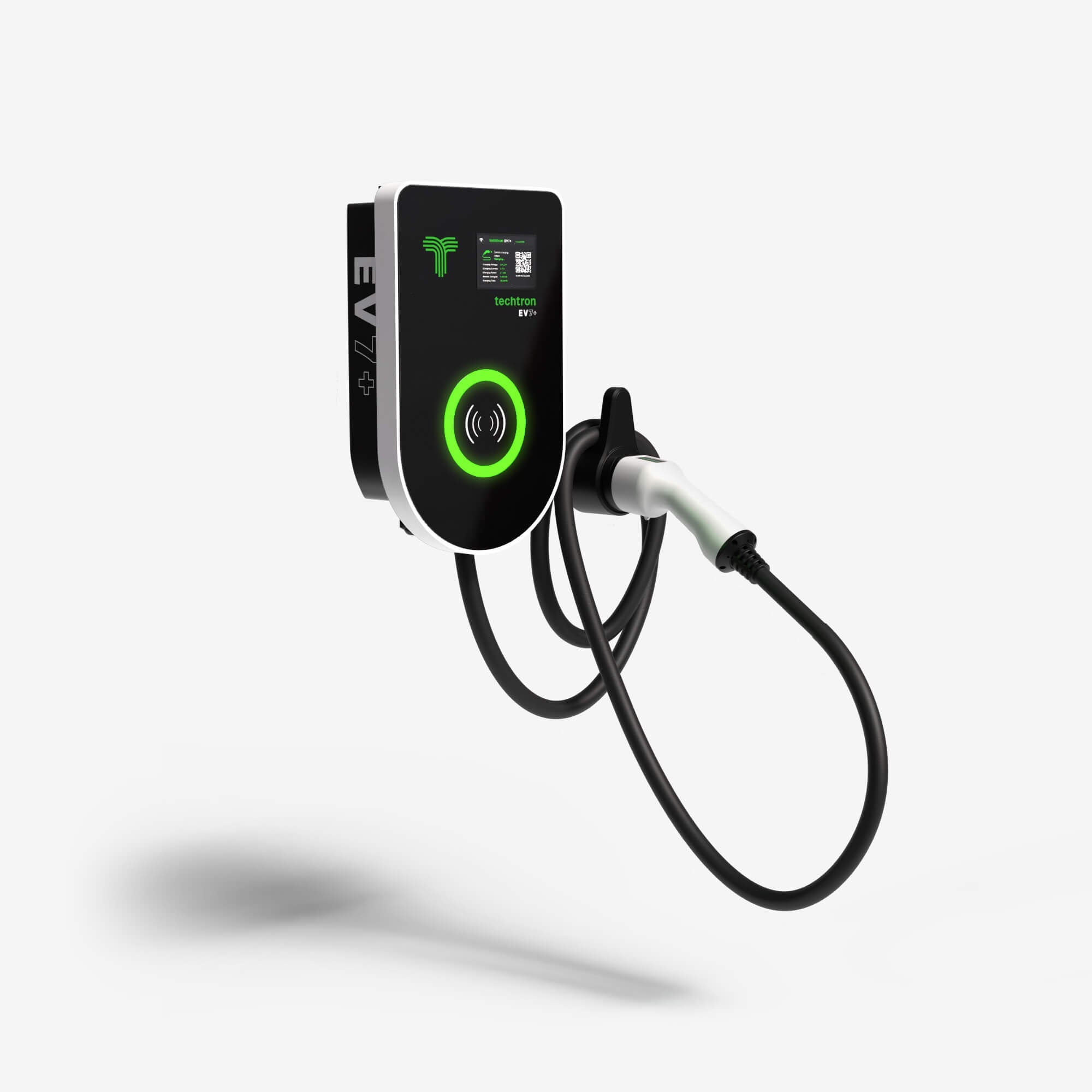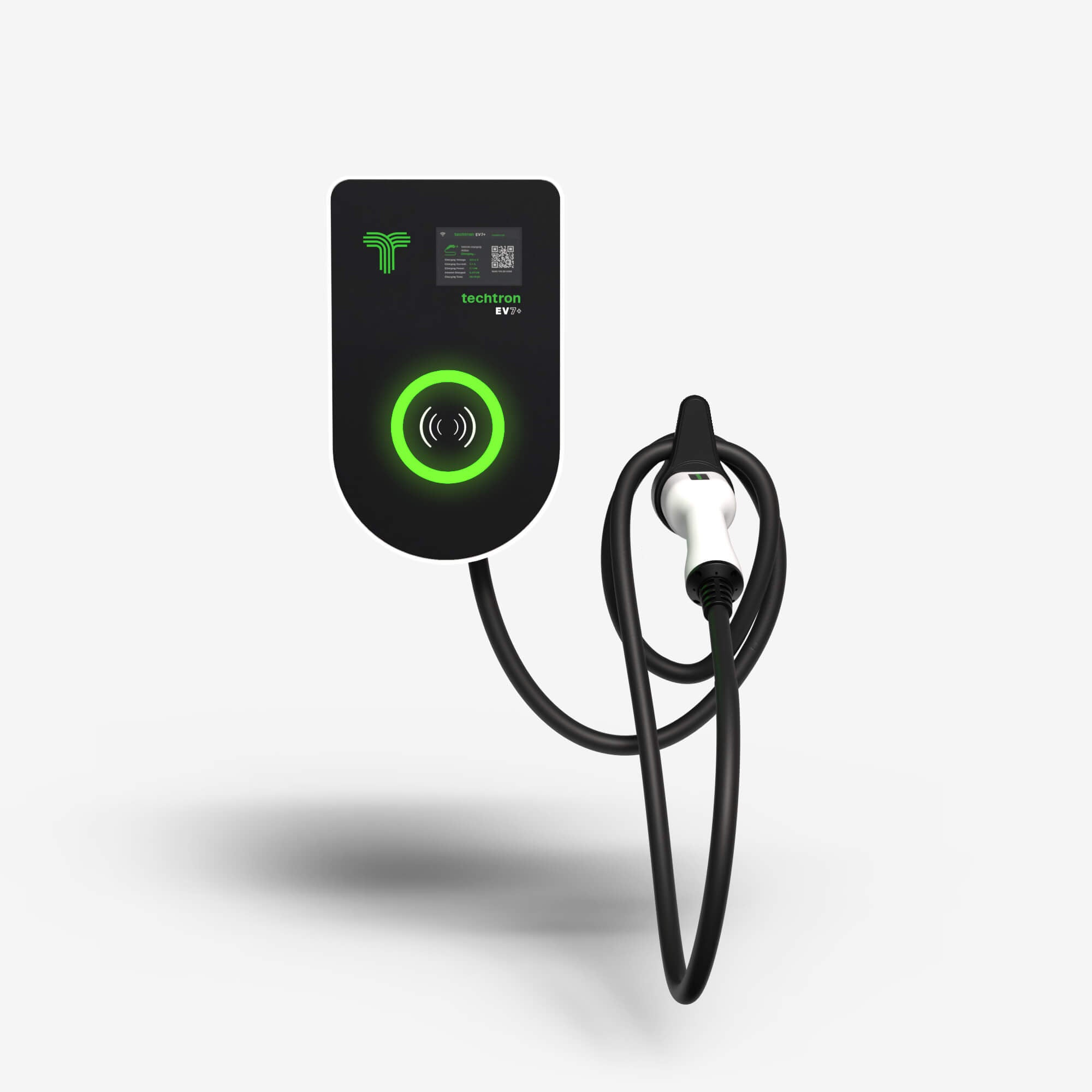

Most UK homes will never need an 11kW EV charger — and saying so plainly is the fastest way to help the people who genuinely do. The 11kW question almost always arrives wrapped in confusion: a bigger kilowatt number looks like “faster”, but real-world speed depends entirely on two things the headline never mentions — the electricity supply feeding your property, and your car’s onboard charger. This guide settles that in plain English, covers the cost and multi-vehicle questions installers wish buyers asked first, and shows exactly where the techtron® EV11 EVO earns its place.
Many buyers assume that an 11kW wallbox automatically charges every EV faster. In reality, the vehicle’s onboard AC charger and the site supply decide the real speed. This guide is written to help customers avoid overbuying, under-specifying, or choosing a charger before the electrical setup is understood.
What an 11kW EV charger actually is
An 11kW charger delivers AC power across three phases rather than the single phase found in most British homes. A standard domestic supply tops out around 7kW (single-phase, ~32A). To reach 11kW you need a three-phase supply — three live conductors instead of one — raising deliverable AC power to roughly 11kW at 16A per phase. The benefit is speed: where a 7kW unit adds around 25–30 miles of range per hour, an 11kW unit can deliver meaningfully more, shortening the charge window for larger battery packs and higher-mileage routines.
The caveat that decides everything: your car must have an 11kW three-phase onboard charger to use all of it. Many popular EVs cap AC charging at 7.4kW; some accept 11kW; a few only take single-phase. If the vehicle accepts 11kW, a three-phase wallbox unlocks it. If it does not, you charge at the car’s limit no matter the wallbox rating. Always check the onboard AC charging spec for your exact model and trim before specifying 11kW.
Example vehicle AC charging limits
Use this as a quick orientation. Vehicle AC charging limits vary by model year, trim and optional equipment — always verify against the manufacturer’s specification before choosing a charger.
| Vehicle / category | Typical AC limit | What it means |
|---|---|---|
| Many EVs with a 7.4kW AC limit | Up to 7.4kW | An EV11 may not charge faster than an EV7 for this car |
| Many modern EVs with 11kW AC | Up to 11kW | EV11 can deliver its benefit where three-phase supply exists |
| Selected higher-end EVs | 11kW or higher, model-dependent | Confirm exact trim and onboard charger package |
| Mixed workplace fleet | Varies by vehicle | EV11 may still help where several cars share charging bays |
Should you choose an 11kW EV charger?
Use this simple decision route:
- Does the property already have three-phase supply? If no: the EV7 EVO is likely the better starting point unless a supply upgrade is justified. If yes: continue.
- Can the vehicle accept 11kW AC charging? If no: the charger may not deliver more than the vehicle’s AC limit. If yes: continue.
- Is the site used by more than one car? If no: 11kW may still help for higher-mileage three-phase homes. If yes: the EV11 EVO becomes more relevant for shared charging.
- Is the site a workplace, development or light-commercial site? If no: compare EV7 and EV11 carefully. If yes: the EV11 EVO may be the correct middle ground between 7kW home charging and 22kW commercial throughput.
Three-phase supply: the cost question to ask first
If your property already has three-phase power — common in newer developments, larger homes, workshops, small commercial units and many apartment blocks — an 11kW installation is usually straightforward. If the property does not already have three-phase supply, the upgrade must be assessed by the Distribution Network Operator (DNO). Costs can vary significantly depending on DNO area, network capacity, groundworks, distance from the supply and whether reinforcement is needed. Customers should obtain a DNO quote and installer assessment before choosing an 11kW charger. For many single-phase homes a quality 7kW charger remains the smarter purchase.
What happens before an 11kW installation?
- The installer checks whether the property has three-phase supply.
- The installer reviews charger load, existing circuits and likely demand.
- DNO notification or application is completed where required.
- Any required supply upgrade is quoted separately.
- Charger installation, testing and commissioning are completed by a qualified installer.
- App, RFID and user settings are handed over after installation.
Charging more than one car: what to plan for
This is where three-phase buyers get caught out. On a shared supply — a workplace, a development, a household with two EVs — plugging several cars in at once can overload the building’s main fuse if the site is not designed for it. The protection against that lives in the site design and the installer’s settings, not only in the wallbox. Some chargers add automatic dynamic load balancing; others, including the EV11 EVO, rely on the installer setting a fixed maximum current appropriate to the supply, with the wider site managed at the consumer unit and by load assessment.
The EV11 EVO supports installer-configurable current adjustment (set during commissioning and adjustable in the app), which lets the installer match the charger’s draw to the available supply. It does not perform automatic multi-charger load sharing on its own, so for a multi-car site the right approach is a proper supply and load assessment by the installer, who will size the installation and set each charger’s current accordingly. For a single three-phase home with one EV this is straightforward; for developments and workplaces with several bays, discuss site-wide load planning with your installer before specifying any charger.
For multi-unit sites, confirm the supply assessment, current settings, access control and installation design with your installer before installation.
How the techtron® EVO range compares
Rather than a single wallbox, think of the EVO range as a charging ladder so the decision is about system fit, not an isolated feature:
| Model | Power / supply | Best for | Vehicle requirement | Site requirement |
|---|---|---|---|---|
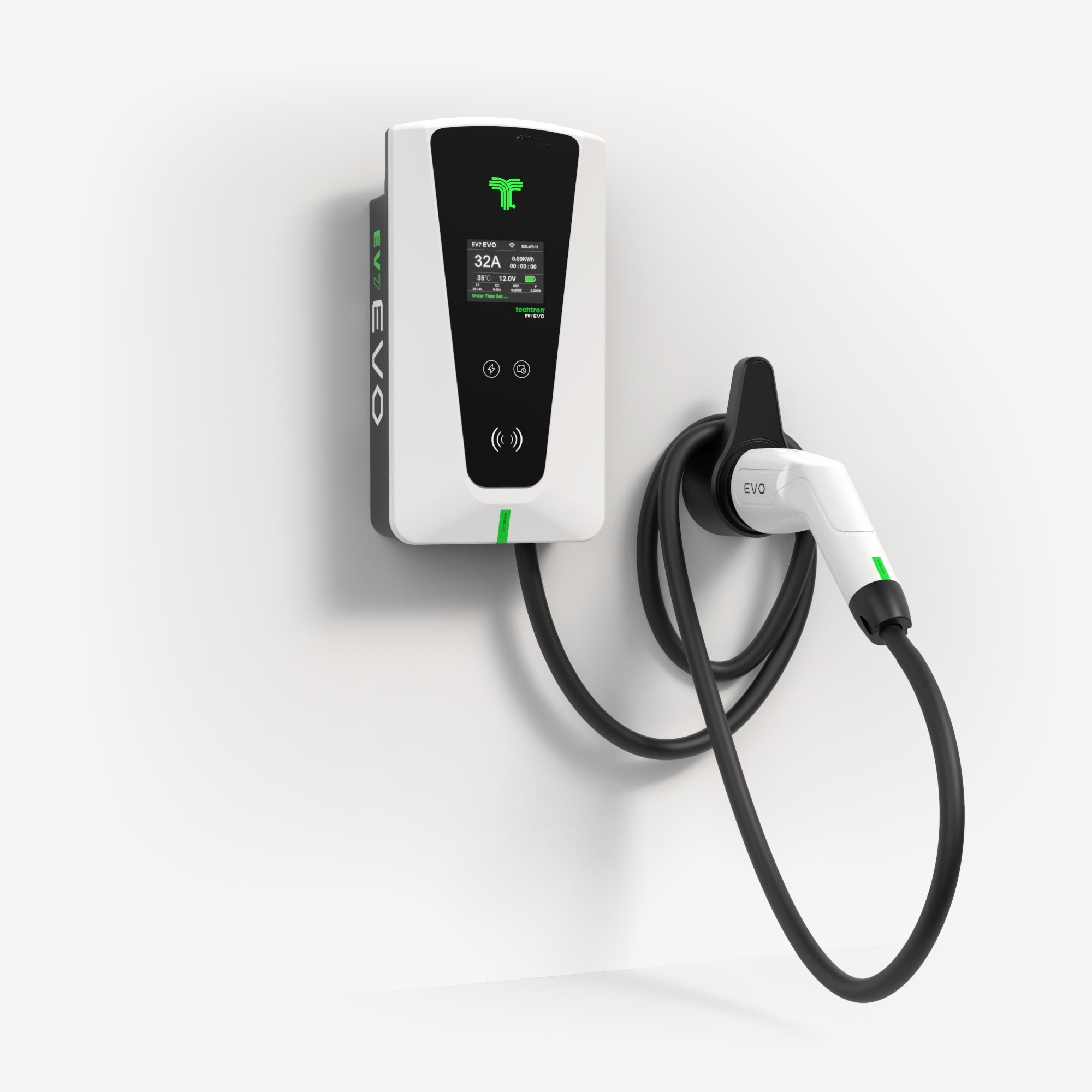
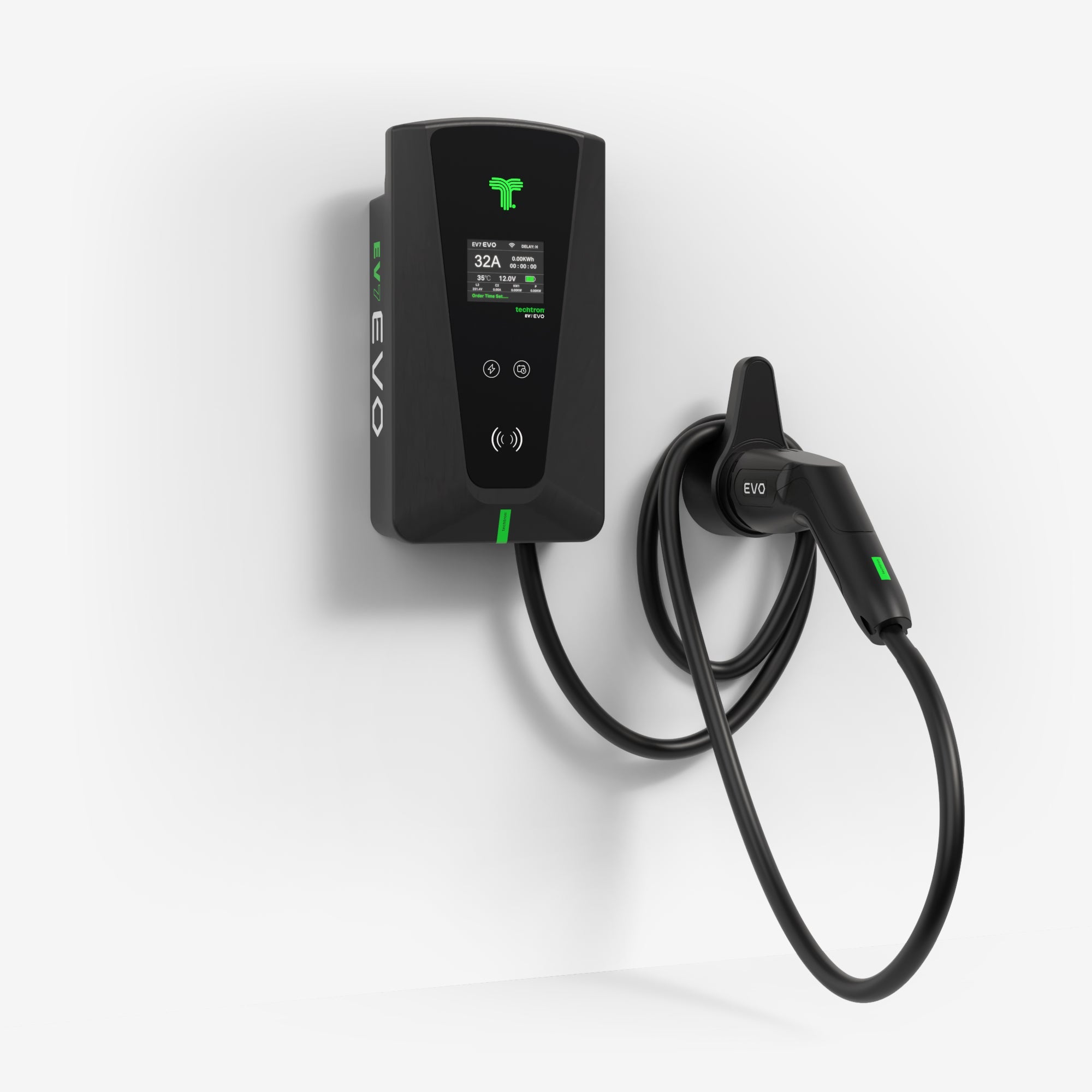
| EV7 EVO | 7.6kW, single-phase | Standard homes and overnight charging | Works for most EVs within normal AC limits | Suitable single-phase supply |
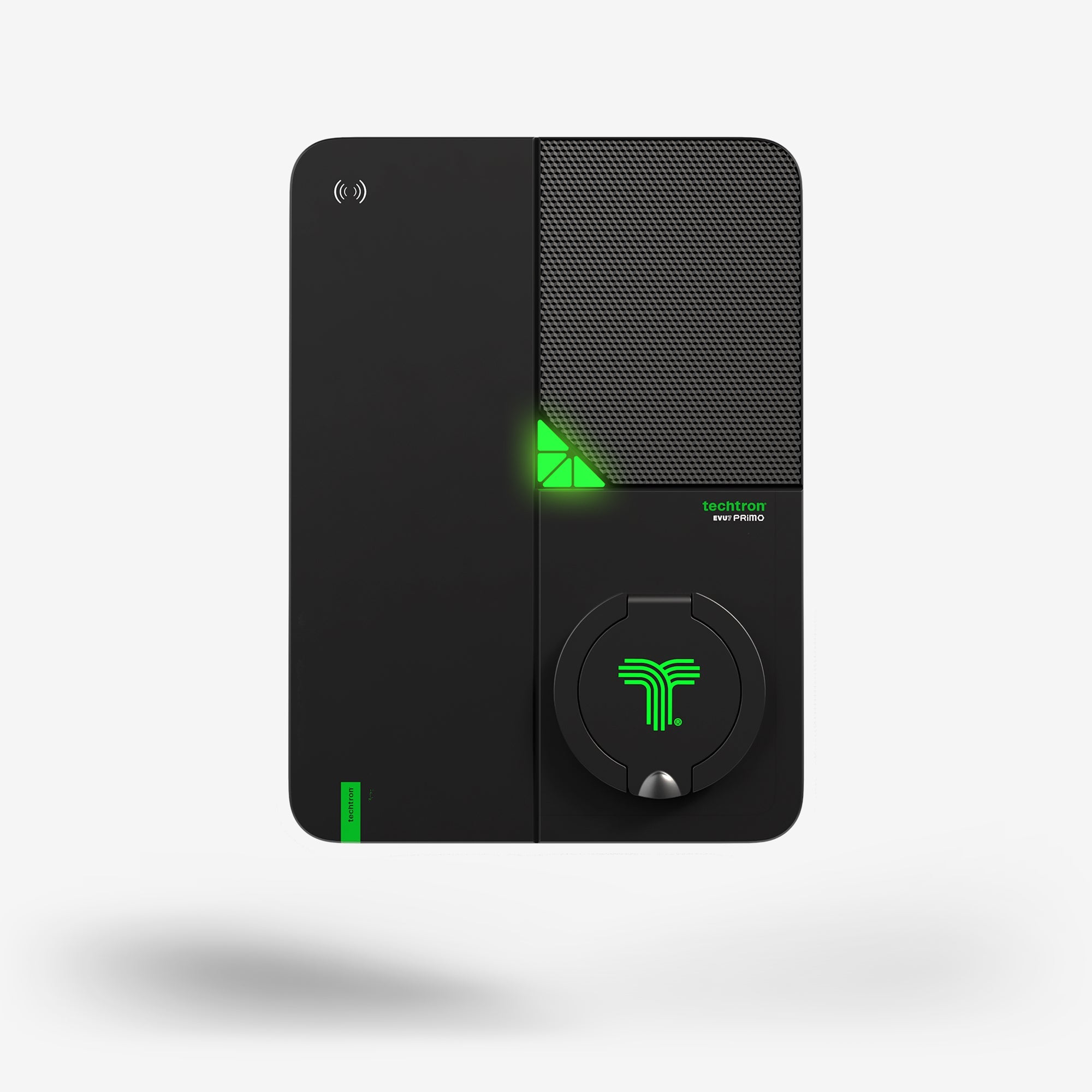
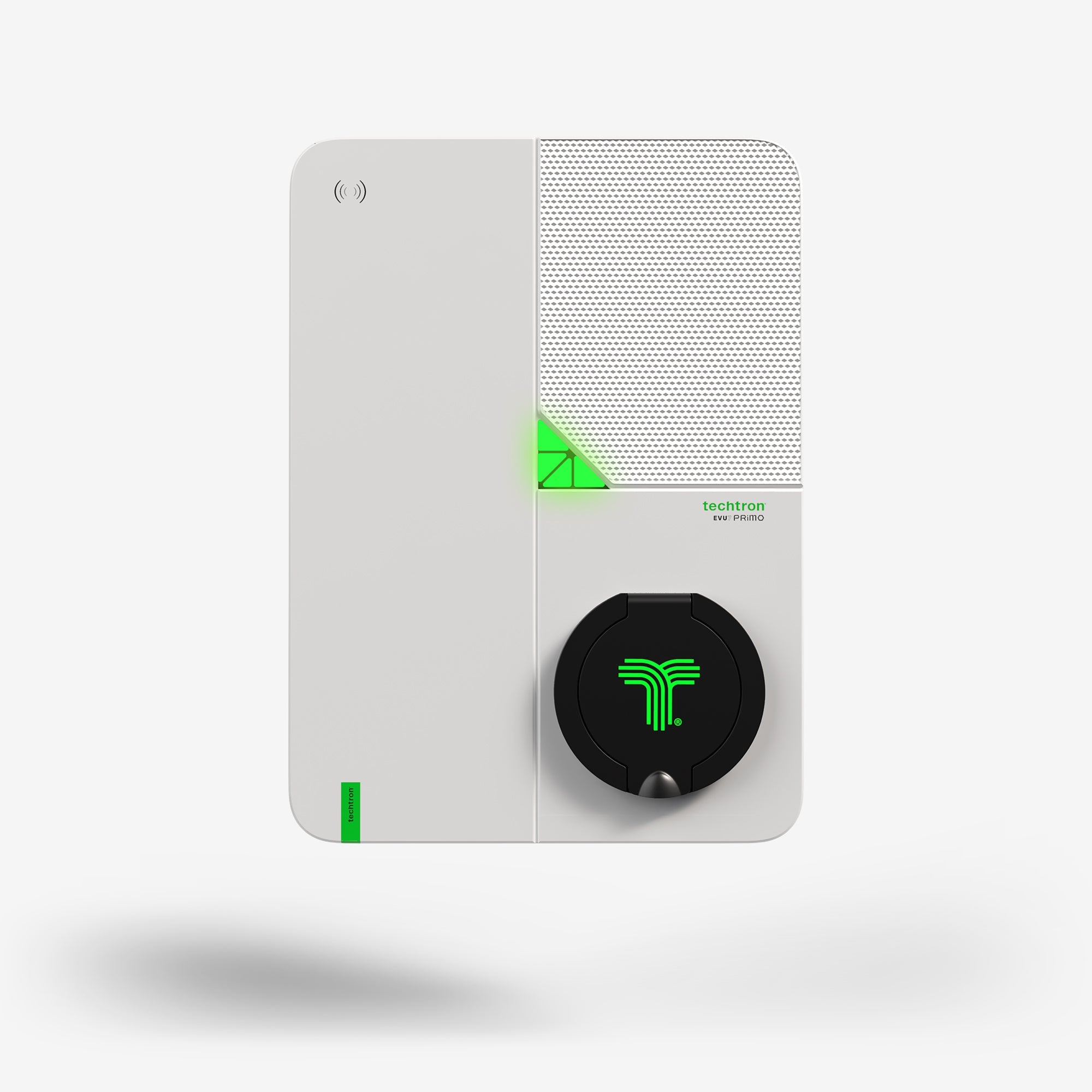
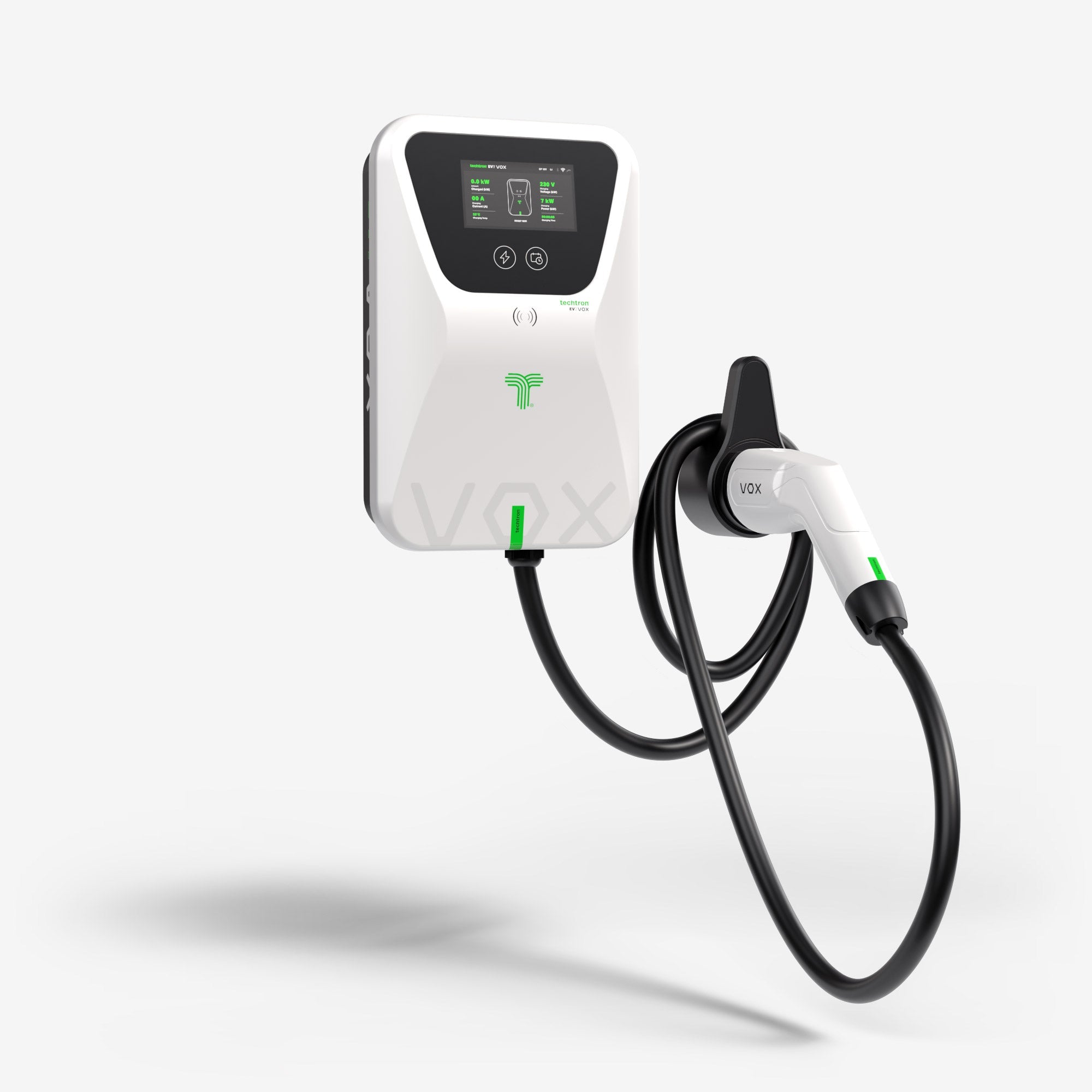
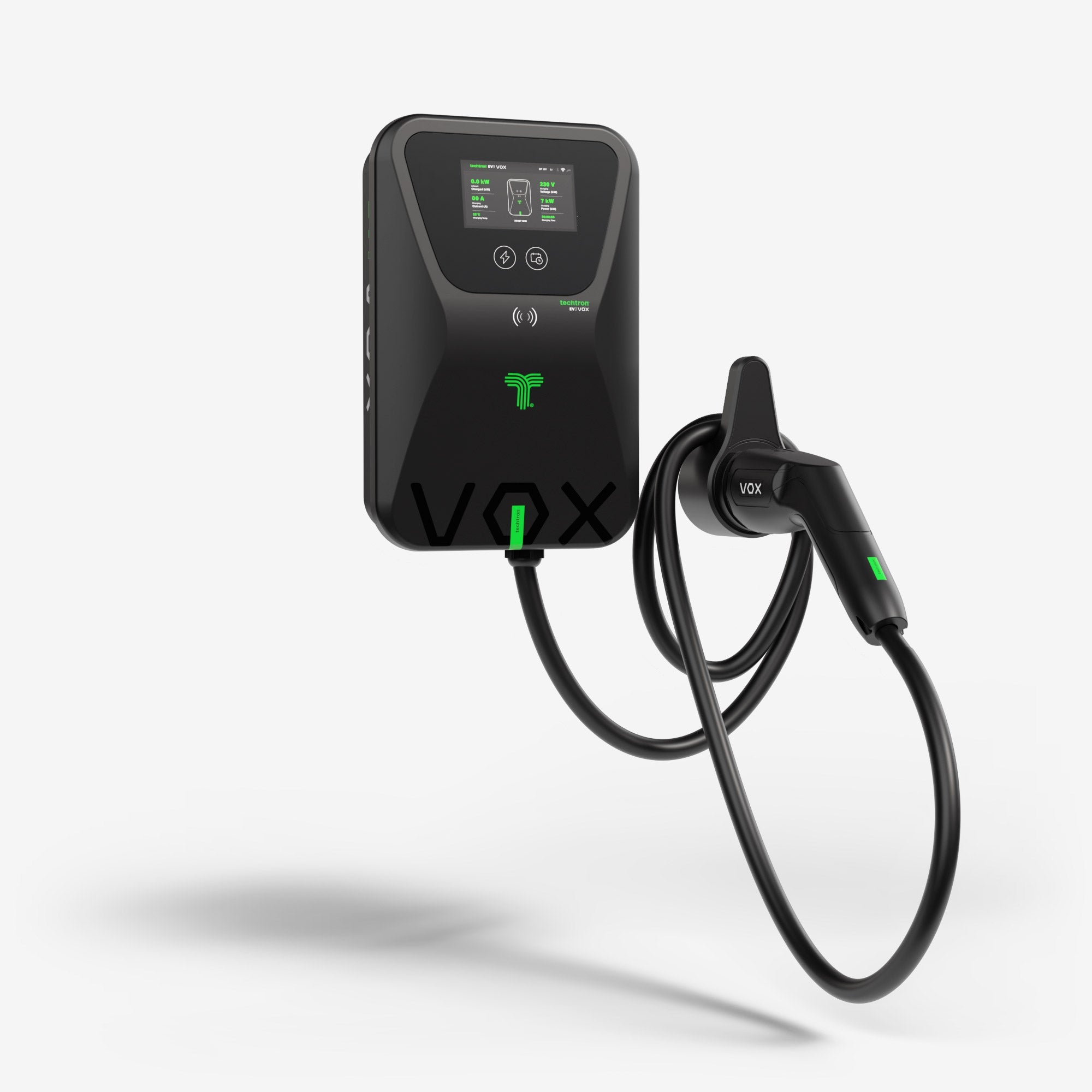
| EV11 EVO | 11kW, three-phase | Three-phase homes, developments, workplaces and light-commercial sites | Vehicle should support 11kW AC for full benefit | Three-phase supply and installer assessment |
| EV22 EVO | 22kW, three-phase | Commercial, fleet and high-throughput AC charging | Vehicle must support higher AC charging for full benefit | Three-phase site with sufficient capacity |
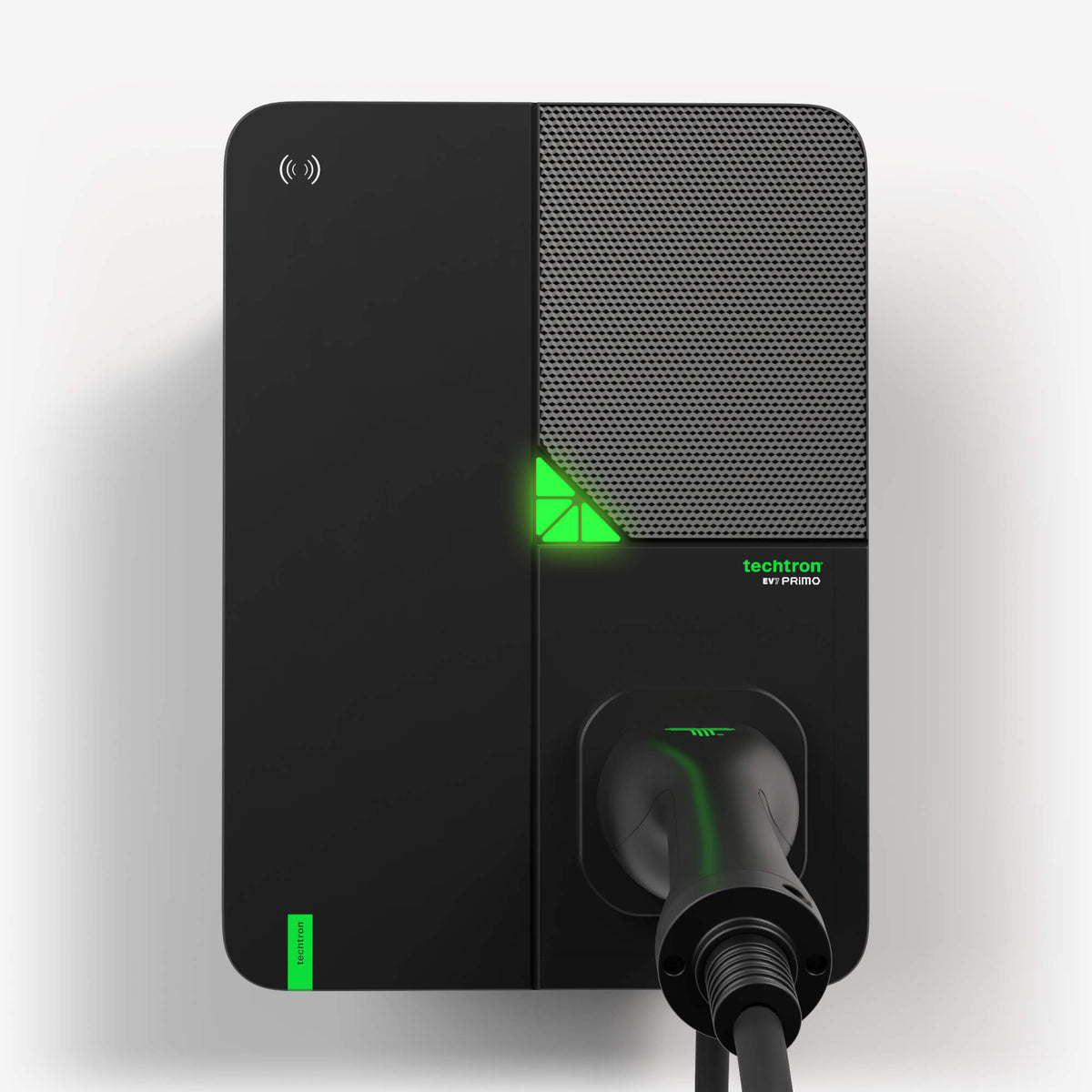
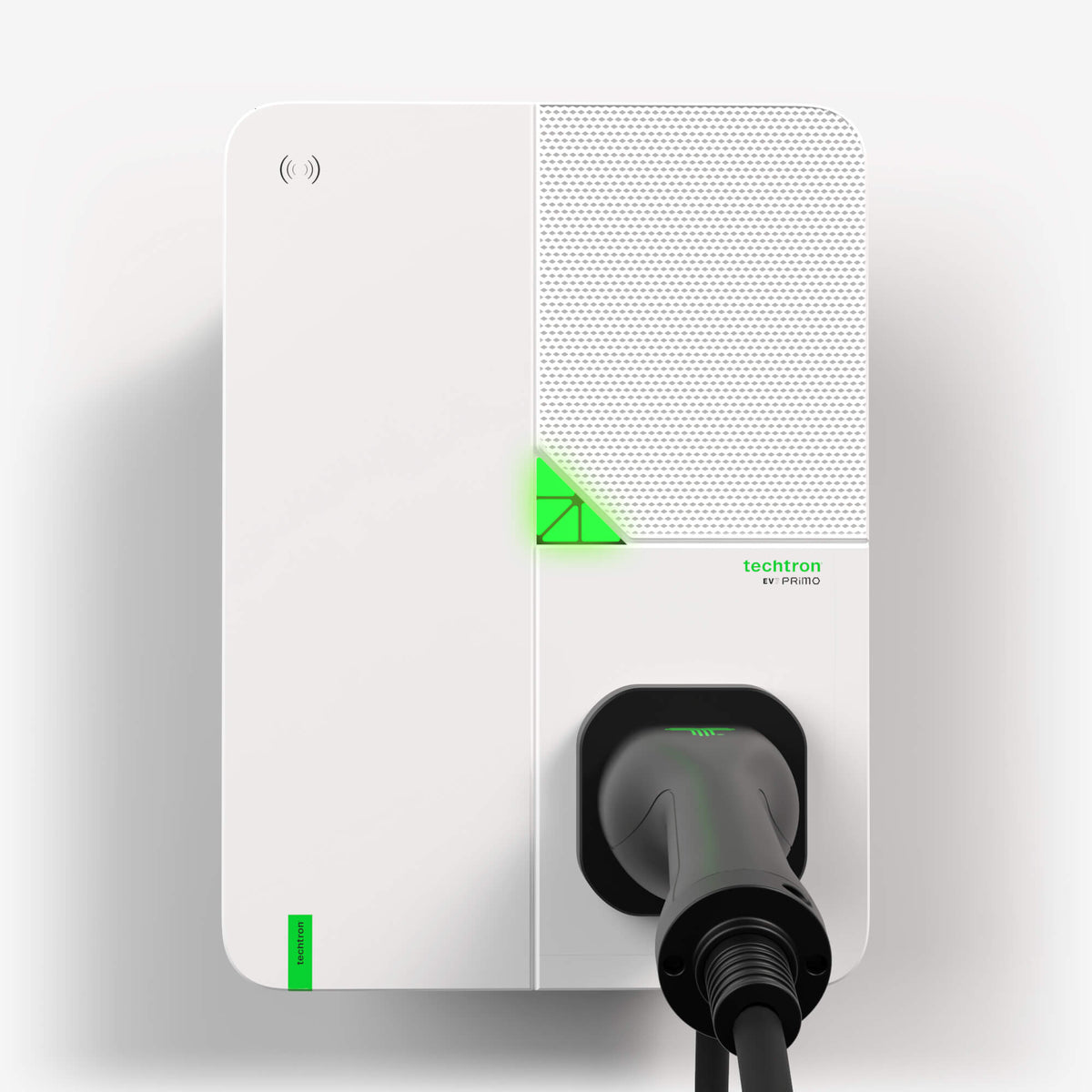
Shared across the range: Type 2 smart charging, app control, RFID access, a 2.8-inch LCD, IP65 weatherproofing and a 14-in-1 protection suite. The EV11 EVO is the three-phase middle rung — the right call when the supply supports it.
techtron® EV11 EVO — verified specifications
| Specification | EV11 EVO (EV11E1 / EV11E2) |
|---|---|
| Rated power | Up to 11kW |
| Supply / output | AC400V (±10%) three-phase, 3P+N+PE; 16A rated output |
| Connector | Type 2, Mode 3, tethered 5m UL-grade TPU cable |
| Connectivity | Wi-Fi 2.4/5GHz, Bluetooth 5.3 (offline charging via RFID supported) |
| Display / access | 2.8-inch LCD; RFID card & key-fob authentication; emergency button |
| Protection | 14-in-1 system; integrated Type A RCD; 6mA DC leakage detection; PEN fault protection |
| Ingress / build | IP65 control box and gun head; PC940 plastic / galvanised steel; tempered-glass front |
| Dimensions / weight | Control box 301 × 162.7 × 74mm; net 3.9kg / gross 6.7kg |
| Certification | CE, UKCA, RoHS — OZEV approved |
| Warranty | 12 months, extendable to 3 years on registration |
Where the techtron® EV11 EVO fits — feature highlights
- Power & compatibility: Up to 11kW three-phase (AC400V, 16A) Type 2 AC output for compatible EVs and plug-in hybrids across the UK and EU.
- Smart control: Schedule sessions, set off-peak windows, adjust current and monitor live status from the techtron® app over Wi-Fi (2.4/5GHz) and Bluetooth 5.3.
- On-unit visibility: A clear 2.8-inch LCD shows live session and system status on the unit.
- Access control: RFID card and key-fob authentication restricts charging to authorised users — valuable for shared parking, workplaces and developments — and works offline.
- Safety: 14-in-1 intelligent protection with integrated Type A RCD, 6mA DC leakage detection, PEN fault protection and an emergency button.
- Build: IP65-rated control box and gun head with a tempered-glass front for reliable outdoor operation and a clean wall presence.
- Solar: Solar-compatible via a hybrid inverter or external energy management system (EMS); surplus-only solar charging is supported when controlled by compatible EMS. The charger has no internal CT clamp or built-in export limiting, so confirm your inverter/EMS setup with your installer.
- Future-ready: Over-the-air updates help the unit stay aligned with evolving UK smart-charging regulations.
- Certification & warranty: CE, UKCA and RoHS certified, OZEV approved, and supplied with a 12-month warranty extendable to 3 years on registration.
The OZEV grant in 2026: what changed, who qualifies
Funding rules changed on 1 April 2026, so older guidance now misleads. Under the current EV Chargepoint Grant, eligible applicants can claim up to £500 per socket (75% of the combined charger-and-installation cost), and the scheme is confirmed until 31 March 2027. It is not open to standard homeowners of detached or semi-detached houses — they were removed in 2022. It is ring-fenced for renters, flat owners and leaseholders, and landlords (who can claim across multiple sockets). The EV11 EVO is an OZEV-approved smart charger, so where the customer meets the relevant scheme rules and uses an OZEV-authorised installer, eligible installations may be able to access grant support. You must wait for OZEV’s written eligibility confirmation before installation begins. Confirm your eligibility and the latest approved-list position with your installer before you buy.
Installation: what a typical 11kW job involves
An 11kW installation must be carried out by a qualified, OZEV-authorised installer. Expect a supply assessment (confirming three-phase availability and capacity), DNO notification or application where required, fitting and commissioning, and handover of the app and RFID setup. Where a three-phase upgrade is needed, that work is scheduled with the DNO and quoted separately. A reputable installer will tell you plainly whether 11kW is worth it for your property — and a good charger brand should make that easy rather than overselling the bigger number. Always get at least three itemised quotes and ask each installer how they handle load balancing and DNO notification.
Who should not choose an 11kW charger?
An 11kW charger may not be the best choice if:
- Your property only has single-phase supply.
- Your vehicle cannot accept 11kW AC charging.
- You only charge one car overnight.
- The cost of upgrading to three-phase outweighs the charging benefit.
- You do not need faster turnaround or shared charging.
In these cases, the techtron® EV7 EVO may be the more practical and cost-effective choice.
Future-proofing questions before choosing 11kW
Before choosing an 11kW charger, ask:
- Will the site add more EVs in the next 12 to 36 months?
- Is site-level load planning or a future supply upgrade needed as more bays are added?
- Will the charger be used by staff, tenants, visitors or multiple household members?
- Is RFID access control required?
- Is solar PV integration planned?
- Is battery storage planned?
- Are smart tariffs or scheduled charging important?
- Will the site need centralised charger management or back-office software in future (which may point to a different product or range)?
- Would the EV22 EVO be better if vehicle turnover becomes more demanding?
Why choose techtron® for three-phase EV charging?
- Clear EV7, EV11 and EV22 model pathway.
- Smart charging features across the EVO range.
- Support for home, workplace and light-commercial charging decisions.
- Product guidance before purchase.
- Installer route guidance where applicable.
- UK-focused product information and customer support.
- Warranty and specification information available before ordering.
The bottom line
An 11kW EV charger is the right answer for a specific, growing group of UK properties — three-phase homes, developments, workplaces and light-commercial sites — and the wrong answer for the typical single-phase household that charges overnight. If your supply and vehicle support it, the techtron® EV11 EVO offers fast three-phase charging with genuinely useful smart control, real access security, and a build intended for years of outdoor service. Unsure which EVO model fits? Compare the EV7 EVO, EV11 EVO and EV22 EVO against your supply, vehicle and routine — or ask an installer to confirm before you commit.

Before you choose an 11kW charger
Confirm the following:
- Your property has three-phase supply.
- Your vehicle supports 11kW AC charging.
- Your DNO route is understood.
- Your installer has assessed site capacity.
- Load management requirements are confirmed.
- OZEV eligibility is checked.
- Product specifications are verified.
- Future expansion needs are considered.
Download the 11kW EV Charger Buyer Checklist or speak to the techtron® team before choosing your charger. Compare the techtron® EVO range, check your OZEV eligibility, and request a quote from an OZEV-authorised installer.
Related techtron® guides
- EV7 vs EV11 vs EV22 Charger Guide
- EV Charger Installation Guide
- OZEV Grant Guide
- Workplace Charging Guide
- Fleet Charging Guide
- Home Charging Guide
- EV Charging Cost Calculator
- Solar EV Charging Guide
© techtron® — Multibrands Techtron Ltd. Specifications and grant rules are subject to change; verify with your installer before purchase.